
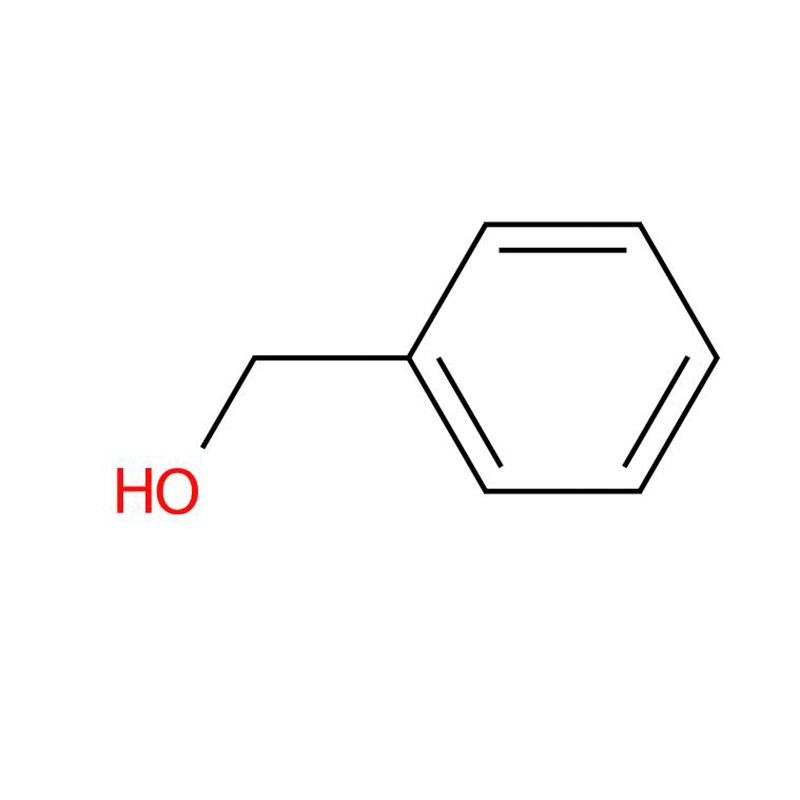
Product Description of Benzyl Alcohol CAS# 100-51-6
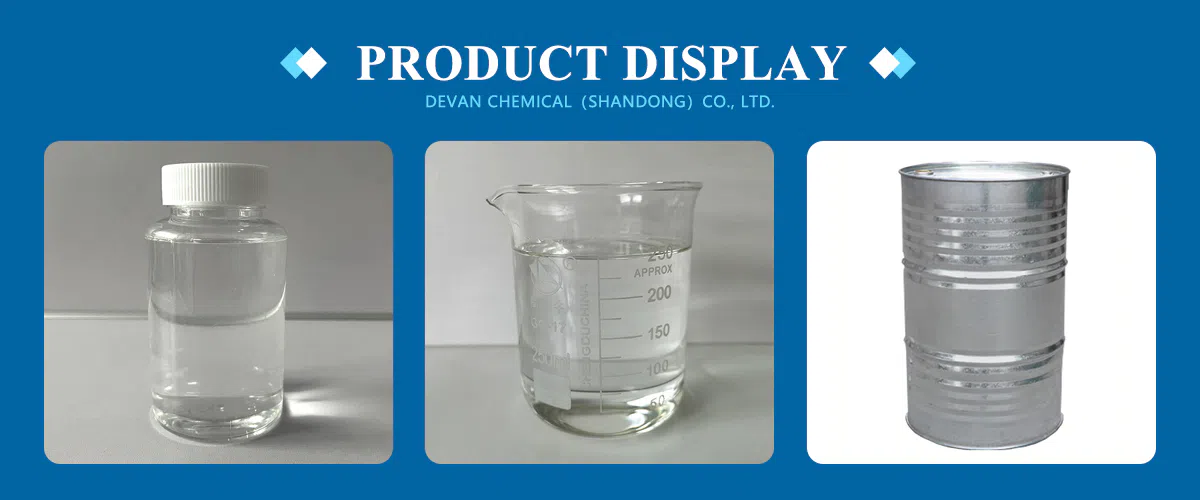
Benzyl alcohol (C₆H₅CH₂OH) is a colourless, transparent viscous liquid with a subtle aromatic scent. It has a density of 1.045 g/mL at 25°C and represents the simplest phenyl-containing aromatic alcohol. From a structural perspective, it can be regarded as benzene substituted with a hydroxymethyl group or methanol bearing a phenyl substituent.
This polar compound features low toxicity and low vapour pressure, rendering it extensively applied as an alcoholic solvent. It is flammable and sparingly soluble in water (roughly 1 g per 25 mL water), yet fully miscible with organic solvents including ethanol, diethyl ether, benzene and chloroform.
Benzyl alcohol occurs naturally in multiple essential oils either in the free state or in the form of esters, such as jasmine oil, ylang-ylang oil, frangipani oil, hyacinth oil, Peru balsam and Tolu balsam. Upon prolonged exposure to air, it slowly oxidizes into benzaldehyde and anisole, generating a faint almond odour. Furthermore, strong oxidants like concentrated nitric acid can further oxidize it to benzoic acid.
Benzyl alcohol Chemical Properties
| Melting point | -15 °C |
| Boiling point | 205 °C |
| density | 1.045 g/mL at 25 °C(lit.) |
| vapor density | 3.7 (vs air) |
| vapor pressure | 13.3 mm Hg ( 100 °C) |
| refractive index | n20/D 1.539(lit.) |
| FEMA | 2137 | BENZYL ALCOHOL |
| Fp | 201 °F |
| storage temp. | Store at +2°C to +25°C. |
| solubility | H2O: 33 mg/mL, clear, colorless |
| pka | 14.36±0.10(Predicted) |
| form | Liquid |
| color | APHA: ≤20 |
| Relative polarity | 0.608 |
| Odor | Mild, pleasant. |
| explosive limit | 1.3-13%(V) |
| Odor Type | floral |
| Water Solubility | 4.29 g/100 mL (20 ºC) |
| Merck | 141124 |
| JECFA Number | 25 |
| BRN | 878307 |
| Henry's Law Constant | <2.70 x 10⁻⁷ at 25 °C (thermodynamic method-GC/UV, Altschuh et al., 1999) |
| Exposure limits | No exposure limit is set. Because of its low vapor pressure and low toxicity, the health hazard to humans from occupational exposure should be very low. |
| Dielectric constant | 13.1(20℃) |
| InChIKey | WVDDGKGOMKODPV-UHFFFAOYSA-N |
| LogP | 1.05 at 20℃ |
| CAS DataBase Reference | 100-51-6(CAS DataBase Reference) |
| NIST Chemistry Reference | Benzyl alcohol(100-51-6) |
| EPA Substance Registry System | Benzyl alcohol (100-51-6) |
Safety Information
| Hazard Codes | Xn,T |
| Risk Statements | 20/22-63-43-36/37/38-23/24/25-45-40 |
| Safety Statements | 26-36/37-24/25-23-53 |
| RIDADR | UN 1593 6.1/PG 3 |
| WGK Germany | 1 |
| RTECS | DN3150000 |
| F | 8-10-23-35 |
| Autoignition Temperature | 817 °F |
| TSCA | Yes |
| HS Code | 29062100 |
| Hazardous Substances Data | 100-51-6(Hazardous Substances Data) |
| Toxicity | LD50 orally in rats: 3.1 g/kg (Smyth) |
Product Application of Benzyl Alcohol CAS# 100-51-6
Benzyl alcohol is a versatile industrial solvent and synthetic intermediate. It functions as a preservative in ointments, a drying agent for fibers, nylon filaments and plastic films, and a stabilizer for polyvinyl chloride. It also finds use in photographic developers, and acts as a solvent for cellulose acetate, printing inks, coatings, paints, epoxy resins, dyestuffs, casein, shellac and gelatin. It is a key intermediate for producing benzyl ethers and benzyl esters.
It is widely used in fragrance and flavor production, especially for fatty acid benzyl esters applied in soaps, perfumes and cosmetics. With a refractive index close to quartz and wool fibers, it is used for fiber identification in analytical tests. In flavor and fragrance formulations, it serves as a fixative and diluent. It undergoes various synthetic reactions to make diphenylmethane, N-benzylacrylamide and benzyl halides, and is a common benzylating agent to introduce hydrogenolyzable benzyl protecting groups for alcohols and carboxylic acids.