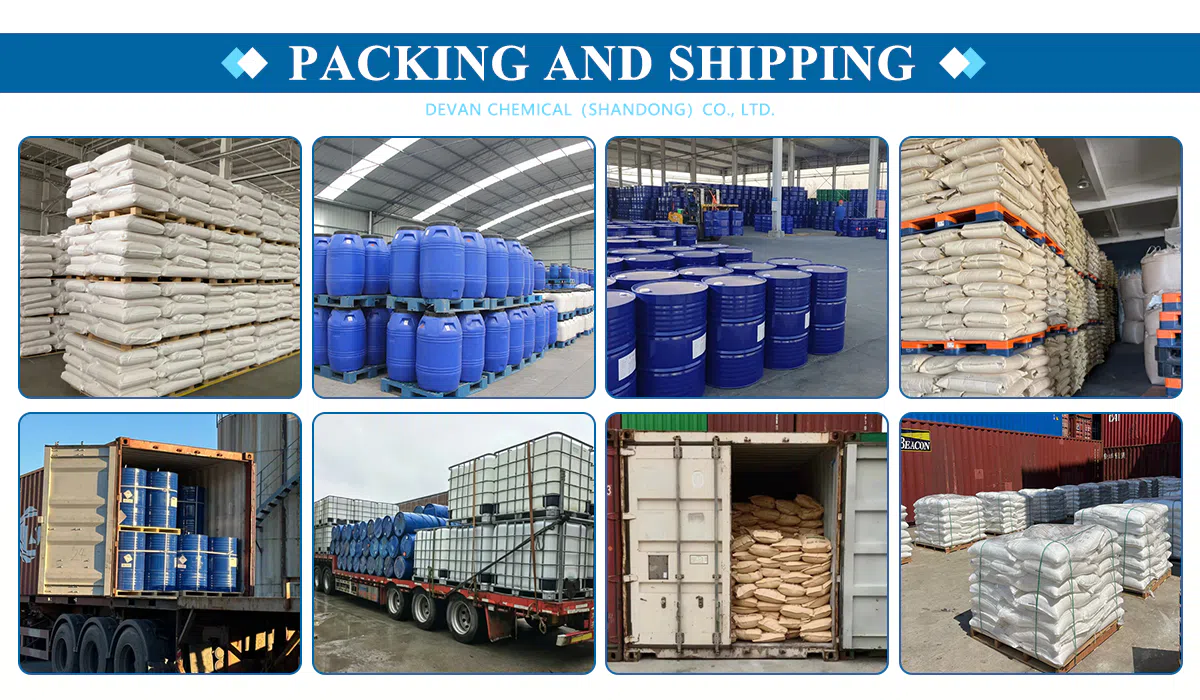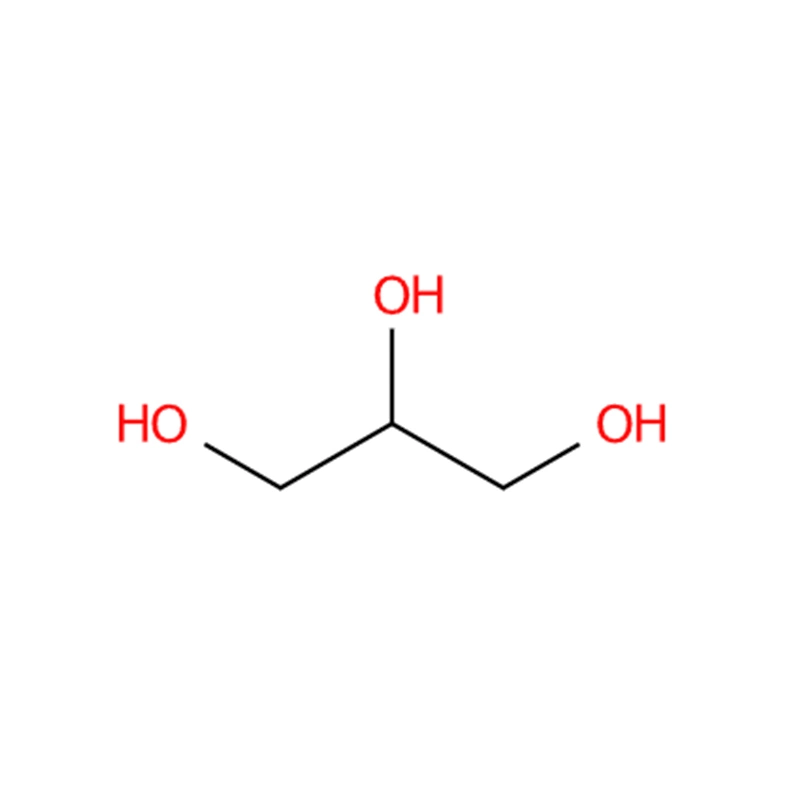
Product Description of Glycerin CAS#56-81-5
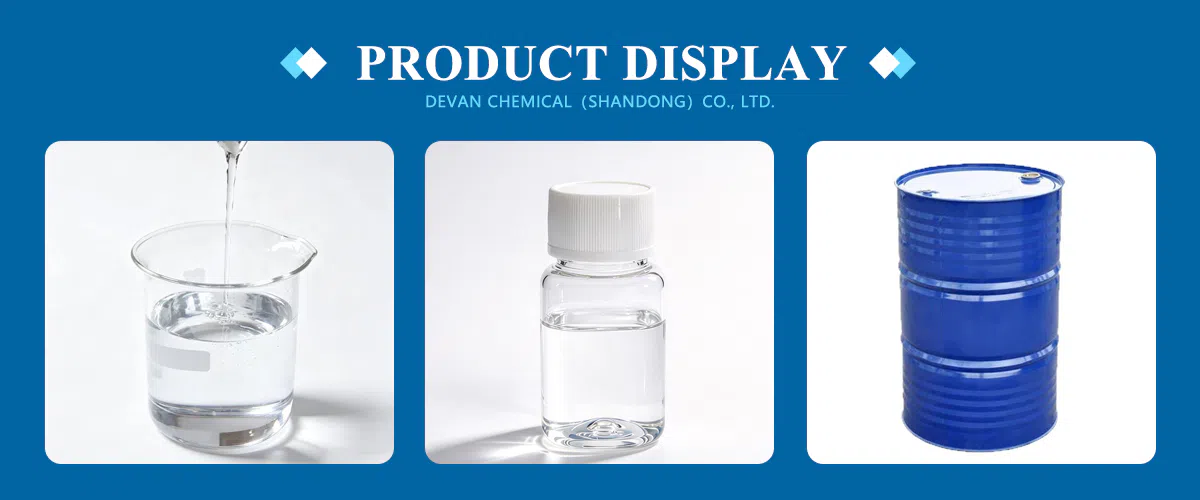
Glycerin, also known as Glycerol, with molecular formula C₃H₈O₃ and molecular weight of 92.09, is a clear, colourless, viscous liquid. It has a sweet taste and mild characteristic odour. This polyhydric alcohol is fully miscible with water and ethanol, while insoluble in non-polar oils. It features low volatility, good humectant property and stable chemical performance under normal storage conditions.
Glycerin can undergo esterification and etherification reactions to produce various derivatives. It serves as a versatile raw material adopted across cosmetics, food, pharmaceutical and fine chemical industries.
Glycerin Chemical Properties
| Melting point | 20 °C(lit.) |
| Boiling point | 290 °C |
| density | 1.25 g/mL(lit.) |
| vapor density | 3.1 (vs air) |
| vapor pressure | <1 mm Hg ( 20 °C) |
| refractive index | n20/D 1.474(lit.) |
| FEMA | 2525 | GLYCEROL |
| Fp | 320 °F |
| storage temp. | Store at +5°C to +30°C. |
| solubility | H2O: 5 M at 20 °C, clear, colorless |
| pka | 14.15(at 25℃) |
| form | Viscous Liquid |
| color | APHA: ≤10 |
| Specific Gravity | 1.265 (15/15℃)1.262 |
| Odor | Odorless. |
| PH Range | 5.5 - 8 |
| PH | 5.5-8 (25℃, 5M in H2O) |
| explosive limit | 2.6-11.3%(V) |
| Odor Type | odorless |
| biological source | synthetic (organic) |
| Water Solubility | >500 g/L (20 ºC) |
| Sensitive | Hygroscopic |
| λmax | λ: 260 nm Amax: 0.05 λ: 280 nm Amax: 0.04 |
| Merck | 14,4484 |
| JECFA Number | 909 |
| BRN | 635685 |
| Dielectric constant | 47.0(Ambient) |
| Exposure limits | OSHA: TWA 15 mg/m3; TWA 5 mg/m3 |
| Stability: | Stable. Incompatible with perchloric acid, lead oxide, acetic anhydride, nitrobenzene, chlorine, peroxides, strong acids, strong bases. Combustible. |
| InChIKey | PEDCQBHIVMGVHV-UHFFFAOYSA-N |
| LogP | -2.32 |
| Surface tension | 64mN/m at 20°C |
| CAS DataBase Reference | 56-81-5(CAS DataBase Reference) |
| NIST Chemistry Reference | 1,2,3-Propanetriol (56-81-5) |
| EPA Substance Registry System | Glycerine (56-81-5) |
| Absorption | ≤0.02 at 280nm in H2O at 0.5M ≤0.07 at 260nm in H2O at 0.5M |
Safety Information
| Hazard Codes | F,Xn |
| Risk Statements | 36-20/21/22-11 |
| Safety Statements | 24/25-39-26 |
| RIDADR | UN 1282 3/PG 2 |
| WGK Germany | 1 |
| RTECS | MA8050000 |
| F | 3 |
| Autoignition Temperature | 698 °F |
| TSCA | Yes |
| HS Code | 29054500 |
| Hazardous Substances Data | 56-81-5(Hazardous Substances Data) |
| Toxicity | LD50 in rats (ml/kg): >20 orally; 4.4 i.v. (Bartsch) |
Product Application of Glycerol CAS#56-81-5
Glycerin is an essential basic organic raw material with widespread applications in industrial manufacturing, pharmaceuticals and consumer goods, with roughly 1,700 documented end uses. Its major application fields include pharmaceuticals, cosmetics, alkyd resins, tobacco, food, and textile printing & dyeing. Demand for glycerin within alkyd resins and celluloid sectors is gradually decreasing, whereas consumption in pharmaceutical, cosmetic and food industries keeps growing steadily.
Furthermore, it has comprehensive applications covering textiles, food production, papermaking, metal processing, coatings, daily chemicals, petrochemicals and pharmaceuticals, among many other fields.