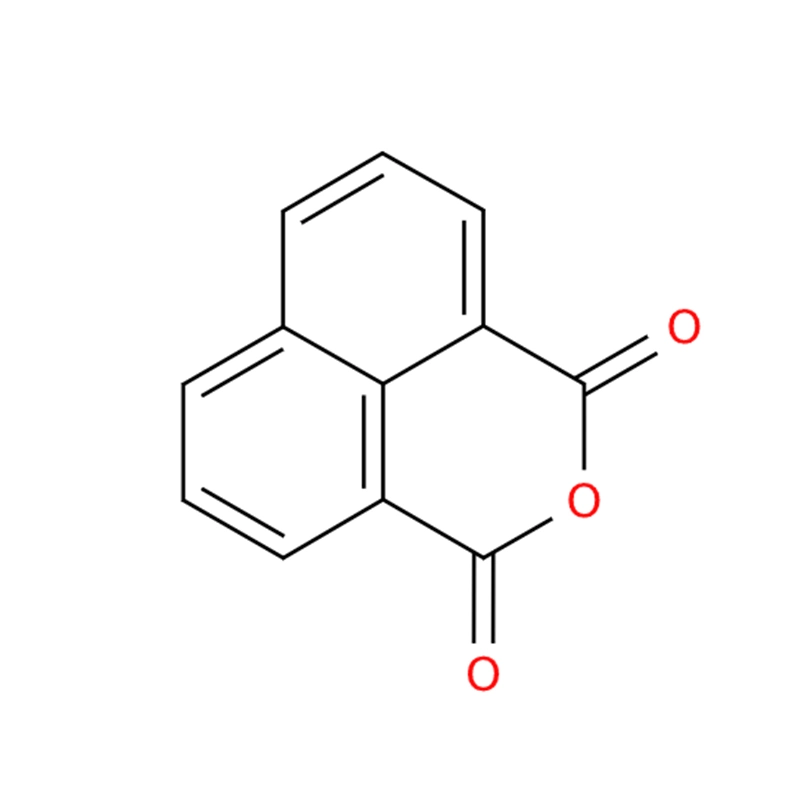
Products Description of 1,8-Naphthalic Anhydride CAS#81-84-5
1,8-Naphthalic Anhydride appears as pale yellow crystalline powder under regular ambient conditions. This cyclic anhydride compound owns stable chemical features and reactive anhydride functional groups, which are capable of carrying out hydrolysis, amidation and cyclization reactions. Its melting point falls within the scope of 267-269°C.
The substance shows poor solubility in cold water, while it can dissolve in hot organic solvents such as ethanol, benzene and acetic acid. With reliable thermal stability, this chemical acts as a fundamental fine-chemical intermediate.
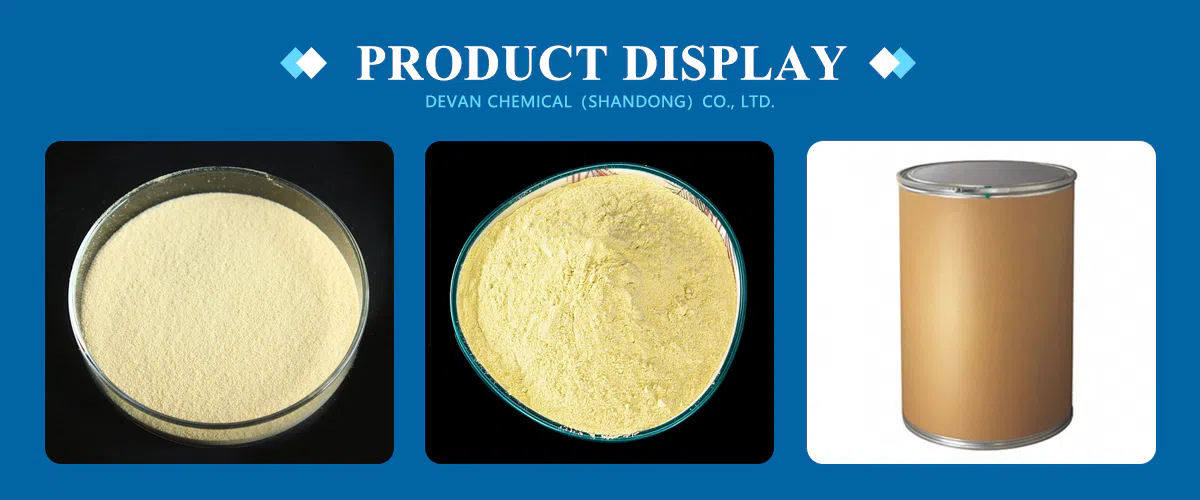
1,8-Naphthalic anhydride Chemical Properties
| Melting point | 269 °C |
| Boiling point | 295.48°C (rough estimate) |
| density | 1.2571 (rough estimate) |
| vapor pressure | 0Pa at 25℃ |
| refractive index | 1.5550 (estimate) |
| Fp | 272 °C |
| storage temp. | Store below +30°C. |
| solubility | Chloroform (Slightly, Heated), DMSO |
| form | Powder |
| color | Pale yellow or beige to light brown |
| Water Solubility | decomposes |
| Sensitive | Moisture Sensitive |
| BRN | 153190 |
| LogP | 3.24 |
| Surface tension | 72.5mN/m at 1.3mg/L and 20℃ |
| CAS DataBase Reference | 81-84-5(CAS DataBase Reference) |
| NIST Chemistry Reference | 1,8-Naphthalic anhydride(81-84-5) |
| EPA Substance Registry System | 1,8-Naphthalic anhydride (81-84-5) |
| Hazard Codes | Xi |
| Risk Statements | 36/37/38 |
| Safety Statements | 26-37/39-24/25 |
| WGK Germany | 2 |
| RTECS | QK5350000 |
| F | 21 |
| TSCA | Yes |
| HS Code | 29173980 |
| Hazardous Substances Data | 81-84-5(Hazardous Substances Data) |

Product Application of 1,8-Naphthalic Anhydride CAS#81-84-5
As a versatile naphthalene-based synthetic building-block, 1,8-naphthalic anhydride is mainly devoted to the preparation of fine-chemical intermediates. It is commonly utilized to synthesize fluorescent brighteners, organic dyestuffs and pigment additives with excellent luminous performance.
In agro-chemical industries, the raw material can produce plant-growth regulators for crop ripening control and seed germination inhibition. It also participates in manufacturing corrosion inhibitors and polymer modifiers for plastic products. Moreover, its reactive anhydride group enables the fabrication of heterocyclic compounds used in medicine-related research, textile auxiliary agents and analytical chemical reagents for laboratory testing work.