
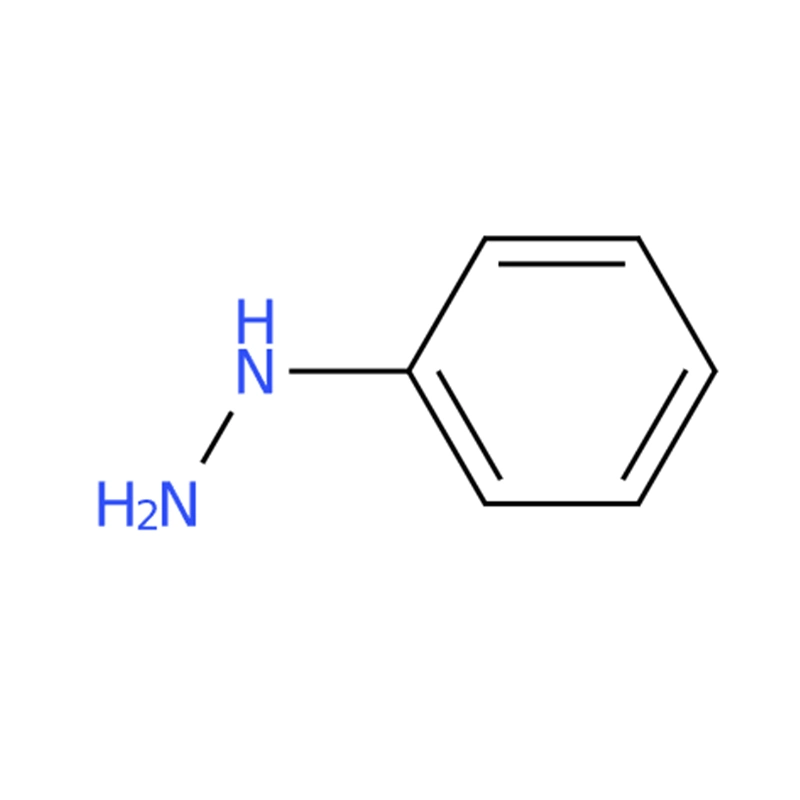
Products Description of Phenylhydrazine CAS#100-63-0
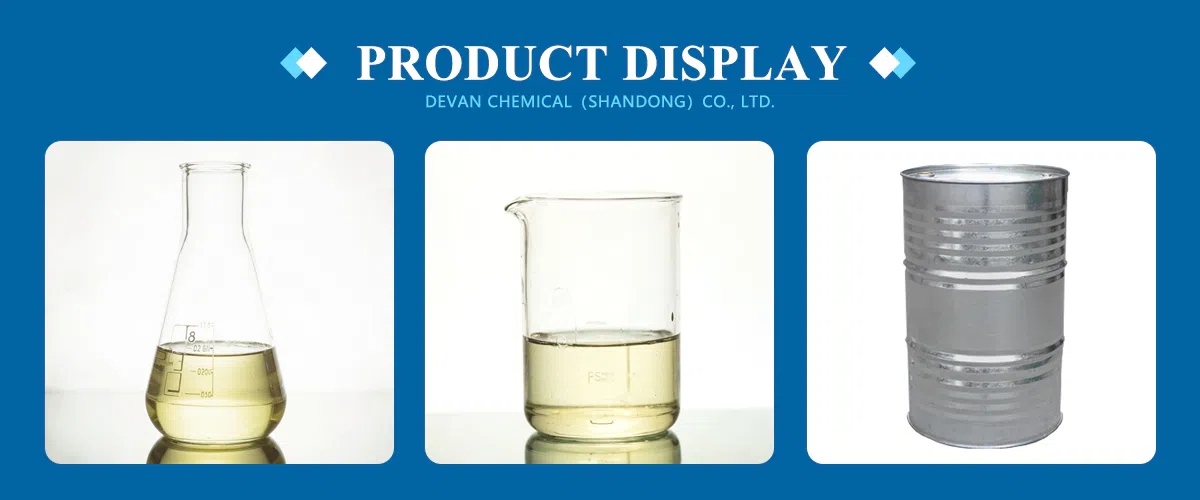
Phenylhydrazine ranks among the earliest-synthesized hydrazine derivatives, first prepared by German organic chemist Hermann Emil Fischer in 1875. Its chemical formula is written as PhNHNH₂. At ambient temperature, the substance exists as pale-yellow oily liquid , and monoclinic prism-shaped crystals will generate under low-temperature surroundings. It tends to get oxidized upon contact with open air and slowly turns dark-brown or deep-red.
This hydrazine derivative shows weak solubility in water and alkaline liquids, dissolves inside diluted acid and mixes well with ethanol, ether, chloroform, benzene and other organic solvents. The standard preparation method starts from aniline. After diazotization with sodium nitrite and hydrochloric-acid medium, sodium sulfite and sodium hydroxide carry out the reduction procedure. Acid precipitation yields phenylhydrazine hydrochloride, and subsequent neutralization releases the target product.
Phenylhydrazine Chemical Properties
| Melting point | 18-21 °C (lit.) |
| Boiling point | 238-241 °C (lit.) |
| density | 1.098 g/mL at 25 °C (lit.) |
| vapor density | 4.3 (vs air) |
| vapor pressure | <0.1 mm Hg ( 20 °C) |
| refractive index | n20/D 1.607(lit.) |
| Fp | 192 °F |
| storage temp. | Store below +30°C. |
| solubility | Soluble in dilute acids. |
| form | Low-melting crystalline solid / oily liquid |
| pka | 8.79(at 15℃) |
| color | Colorless to pale-yellow |
| explosive limit | Lower explosive limit:1.1 %(V), Upper explosive limit not determined |
| Water Solubility | 145 g/L (20 ºC) |
| Sensitive | Air & Light Sensitive |
| Merck | 147293 |
| BRN | 606080 |
| Exposure limits | TLV-TWA skin 0.1 ppm (0.44 mg/m3) (ACGIH), 5 ppm (22 mg/m3) (OSHA); STEL 10 ppm (44 mg/m3) (OSHA); carcinogenicity: A2-Suspected Human Carcinogen (ACGIH), Carcinogen (NIOSH). . |
| Dielectric constant | 7.2(23℃) |
| Stability: | Stable, but may decompose in sunlight. May be air or light sensitive. Incompatible with strong oxidizing agents, metal oxides. |
| CAS DataBase Reference | 100-63-0(CAS DataBase Reference) |
| NIST Chemistry Reference | Hydrazine, phenyl-(100-63-0) |
| EPA Substance Registry System | Phenylhydrazine (100-63-0) |
| Hazard Codes | T,N |
| Risk Statements | 45-23/24/25-36/38-43-48/23/24/25-50-68 |
| Safety Statements | 53-45-61 |
| RIDADR | UN 2572 6.1/PG 2 |
| WGK Germany | 3 |
| RTECS | MV8925000 |
| F | 39744 |
| Autoignition Temperature | 345 °F |
| TSCA | Yes |
| HS Code | 2928 00 90 |
| HazardClass | 6.1 |
| PackingGroup | II |
| Hazardous Substances Data | 100-63-0(Hazardous Substances Data) |
| Toxicity | LD50 orally in Rabbit: 188 mg/kg |
| IDLA | 15 ppm |
Product Application of Phenylhydrazine CAS#100-63-0
Phenylhydrazine serves as a crucial synthetic intermediate in the pesticide industry. It is widely adopted to produce 1-phenylaminourea, the core intermediate for manufacturing the organophosphorus insecticide triazophos, as well as 1-phenyl-3,6-dihydroxypyridazine for pyridazinone pesticide synthesis. It also acts as a key precursor for high-efficiency fungicides including famoxadone and fenamidone.
As a versatile fundamental raw material for fine organic synthesis, phenylhydrazine is extensively utilized across dye manufacturing, pharmaceutical synthesis and other chemical processing fields. Additionally, it functions as a classic analytical reagent for routine laboratory testing and academic research.