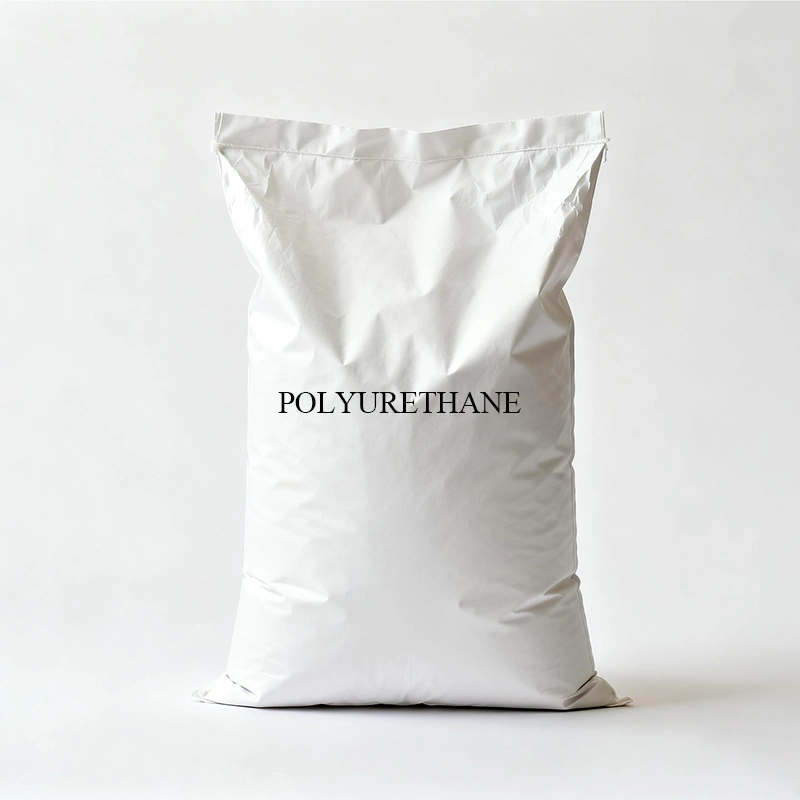
Products Description of Polyurethane CAS#9009-54-5
Polyurethanes are generally synthesized from multiple isocyanate species, such as tolylene diisocyanate (TDI), hexamethylene diisocyanate (HDI), dicyclohexylmethane diisocyanate and other analogous compounds.
The majority of these isocyanates are low-viscosity liquids under ambient conditions; 4,4'-diphenylmethane diisocyanate (MDI) constitutes an exception, as it normally exists as a crystalline solid.
Aromatic isocyanates possess higher reactivity relative to aliphatic counterparts, which enables their extensive deployment for manufacturing urethane foams, coatings and elastomeric materials.
Furthermore, the cyclic moieties within aromatic and alicyclic isocyanates increase molecular rigidity and stiffness within polyurethane matrices, thereby elevating the performance of end-use materials.
Polyurethane Chemical Properties
bulk density | 0.08g/cm3 |
form | foam |
Stability: | Stable. Combustible. Incompatible with strong oxidizing agents. |
InChI | InChI=1S/C3H8N2O/c1-2-5-3(4)6/h2H2,1H3,(H3,4,5,6) |
InChIKey | RYECOJGRJDOGPP-UHFFFAOYSA-N |
SMILES | N(CC)C(N)=O |
CAS DataBase Reference | 9009-54-5 |
IARC | 3 (Vol. 19, Sup 7) 1987 |
Product Application of Polyurethane CAS#9009-54-5
Polyurethane finds utility in orthopaedic prosthetic appliances including internal bone splints. Meanwhile, as resins and foams, it ranks among the most critical industrial polymeric materials.
Polyurethane-based resins and foams are available in rigid, semi-rigid and flexible foam variants alongside resin articles, endowing PUR with highly diverse commercial application prospects.
It is extensively adopted for furniture, bedding articles, automotive sealing parts, adhesives, carpets, packaging media, coatings and numerous other industrial and consumer-grade goods.
Thanks to its favourable oil resistance, light stability and solvent tolerance, coupled with exceptional mechanical strength and pliability, polyurethane enjoys high industrial recognition.
Such polymers are generally generated via polyaddition reactions between diisocyanates and polyhydroxy substances represented by polyols, which permits flexible formula customization to satisfy varying performance specifications.