Products Description of Phenol CAS#108-95-2
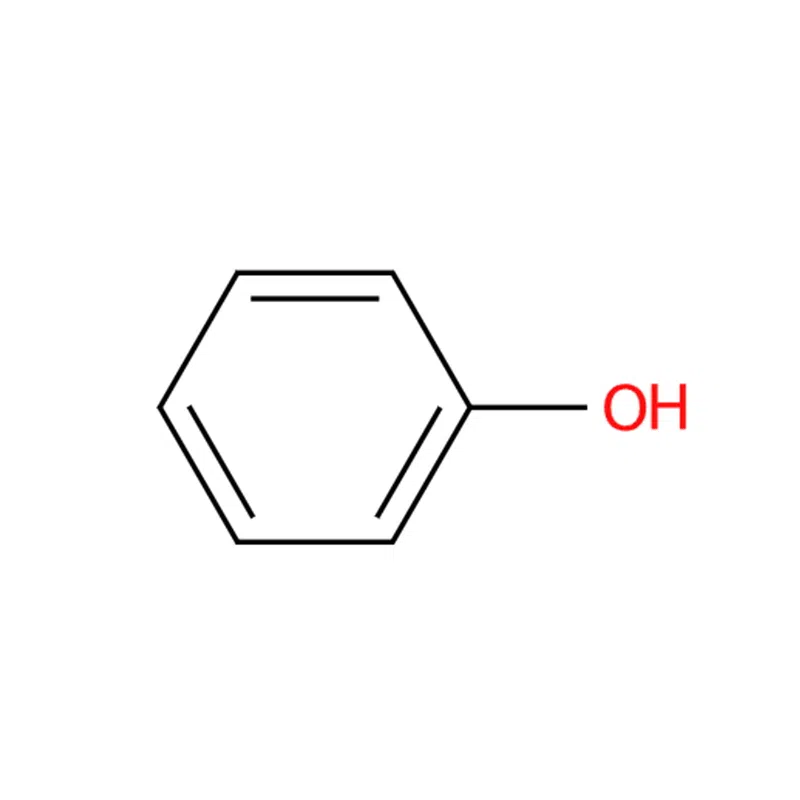
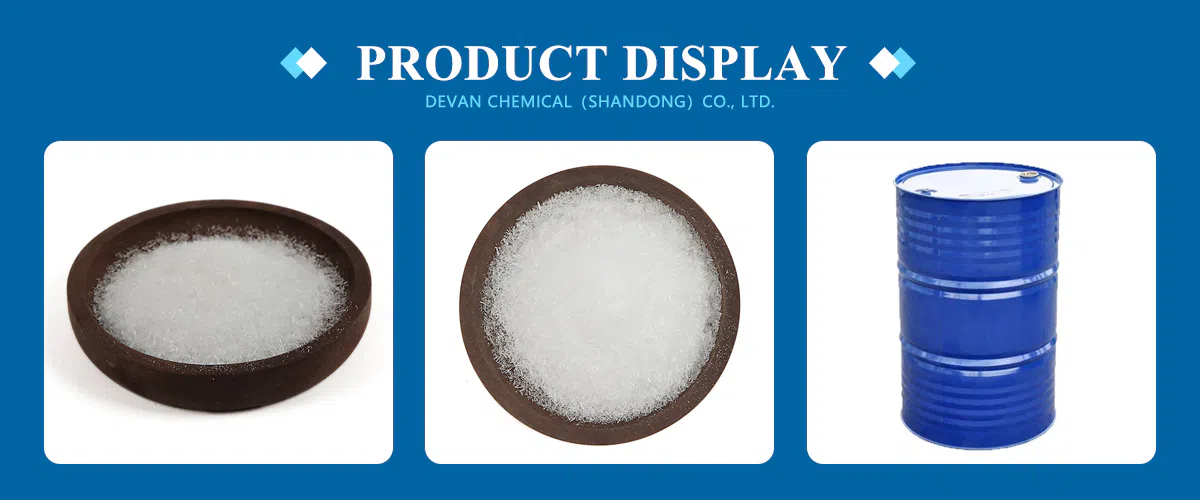
Phenol also named carbolic acid, has the molecular formula C₆H₅OH. It is a colourless or white crystalline solid at ambient temperature, featuring a distinctive phenolic odour. It gradually turns pink when exposed to air and light. This aromatic compound carries a hydroxyl group directly attached to the benzene ring, giving it good chemical activity for substitution reactions. It dissolves moderately in water and mixes well with ethanol, ether and other common organic solvents.
As a fundamental industrial organic intermediate, it is widely adopted for producing phenolic resin, bisphenol A, pesticides, pharmaceutical ingredients, dyes and additives. It is corrosive and toxic, so strict protective measures must be taken during storage and operation.
Phenol Chemical Properties
| Melting point | 40-42 °C(lit.) |
| Boiling point | 182 °C(lit.) |
| density | 1.071 g/mL at 25 °C(lit.) |
| vapor density | 3.24 (vs air) |
| vapor pressure | 0.09 psi ( 55 °C) |
| refractive index | n20/D 1.53 |
| FEMA | 3223 | PHENOL |
| Fp | 175 °F |
| storage temp. | 2-8°C |
| solubility | H2O: 50 mg/mL at 20 °C, clear, colorless |
| form | Needle crystal |
| pka | 9.89(at 20℃) |
| Specific Gravity | 1.071 |
| color | Colorless to white |
| PH | 6.47(1 mM solution);5.99(10 mM solution);5.49(100 mM solution); |
| Odor | Sweet, medicinal odor detectable at 0.06 ppm |
| explosive limit | 1.3-9.5%(V) |
| Odor Threshold | 0.0056ppm |
| Odor Type | phenolic |
| Water Solubility | 8 g/100 mL |
| FreezingPoint | 41℃ |
| Sensitive | Air & Light Sensitive |
| Merck | 147241 |
| JECFA Number | 690 |
| BRN | 969616 |
| Henry's Law Constant | 1.09 at 5 °C (average derived from six field experiments, Lüttke and Levsen, 1997) |
| Dielectric constant | 4.3(10℃) |
| Exposure limits | TLV-TWA skin 5 ppm (~19 mg/m3 ) (ACGIH, MSHA, and OSHA); 10-hour TWA 5.2 ppm (~20 mg/m3 ) (NIOSH); ceiling 60 mg (15 minutes) (NIOSH); IDLH 250 ppm (NIOSH). |
| Stability: | Hygroscopic |
| InChIKey | ISWSIDIOOBJBQZ-UHFFFAOYSA-N |
| LogP | 1.47 at 30℃ |
| CAS DataBase Reference | 108-95-2(CAS DataBase Reference) |
| IARC | 3 (Vol. 47, 71) 1999 |
| NIST Chemistry Reference | Phenol(108-95-2) |
| EPA Substance Registry System | Phenol (108-95-2) |
| Hazard Codes | T,C,F,Xn |
| Risk Statements | 23/24/25-34-48/20/21/22-68-40-39/23/24/25-11-36-20/21/22-24/25 |
| Safety Statements | 26-36/37/39-45-36/37-28A-28-24/25-1/2-36-16-7 |
| RIDADR | UN 2821 6.1/PG 2 |
| OEB | A |
| OEL | TWA: 5 ppm (19 mg/m3), Ceiling: 15.6 ppm (60 mg/m3) [15-minute] [skin] |
| WGK Germany | 2 |
| RTECS | SJ3325000 |
| F | 46257 |
| Autoignition Temperature | 715 °C |
| TSCA | Yes |
| HazardClass | 6.1 |
| PackingGroup | II |
| HS Code | 29071100 |
| Hazardous Substances Data | 108-95-2(Hazardous Substances Data) |
| Toxicity | LD50 orally in rats: 530 mg/kg (Deichmann, Witherup) |
| IDLA | 250 ppm |
Product Application of Phenol CAS#108-95-2
As an essential chemical intermediate, phenol is used to synthesize pharmaceuticals including aspirin. It is a major raw material for resins, plastics and synthetic fibres such as nylon. It is applied in detergent formulation and analytical chemistry.
It also produces phenolic resin, caprolactam, bisphenol A, salicylic acid, picric acid, pentachlorophenol, adipic acid, phenolphthalein, N‑acetylethoxyaniline and other intermediates.
In agrochemical manufacturing, it serves as an intermediate for insecticides (carbofuran, phosmet, chlorpyrifos), fungicides (prochloraz, triadimefon, difenoconazole), herbicides (2,4-D, 2,4-D butyl ester) and rodenticides (bromophosmet).
Widely deployed in alkylphenol, synthetic rubber, fragrance, dyestuff, coating and petroleum refining industries, phenol can additionally act as an industrial solvent and laboratory reagent.