
Product Description of Polyphenylene sulfide (PPS) CAS#26125-40-6
Polyphenylene sulfide (PPS) is a high-performance thermoplastic engineering plastic built with repeating p-phenylene sulfide units linked by –S– bonds, with molecular weight typically ranging from 10,000 to 50,000. Linear uncrosslinked PPS can develop thermoset-like performance after crosslinking, while still partially softening on heating, so it remains a thermoplastic instead of a true thermosetting resin.
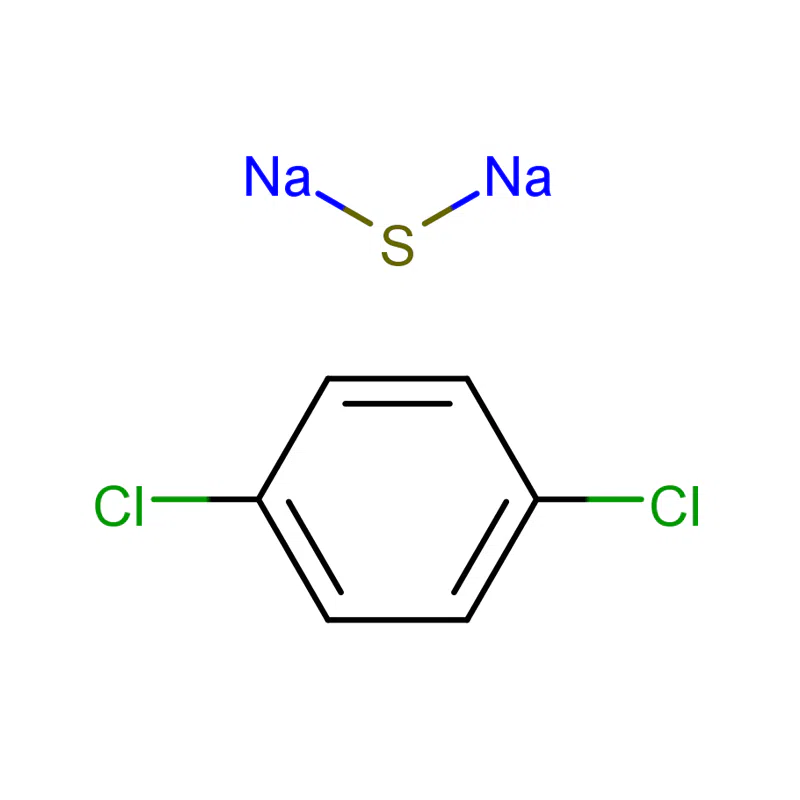
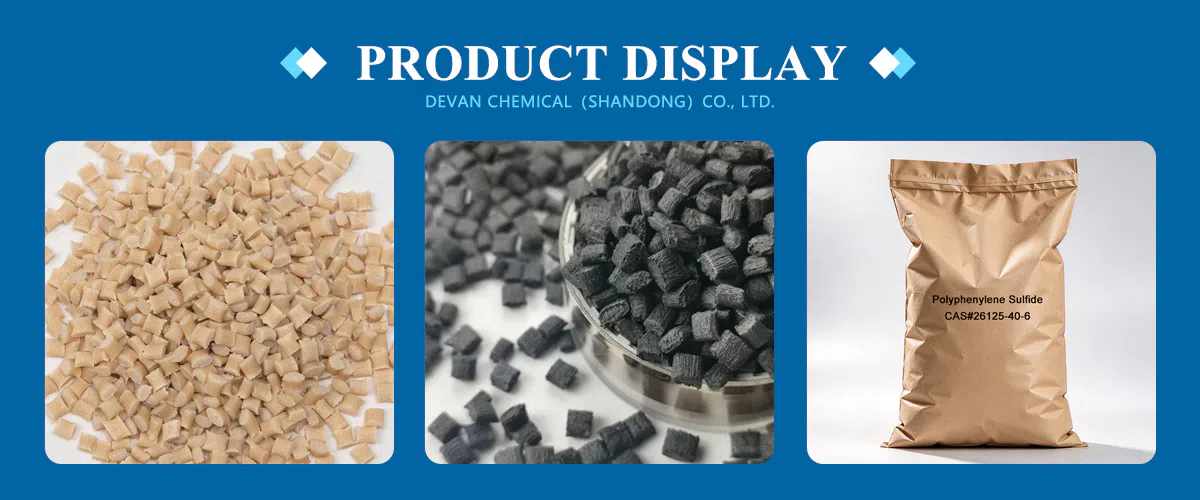
It is mainly produced by polycondensation of sodium sulfide and dichlorobenzene at 220–225 °C in highly polar solvents. In its pure resin form, PPS is usually beige to light yellow powder or pellets; after modification, it takes on brown, gray, black and other colors depending on the filler system. This rigid, highly crystalline material shows melt viscosity of 2.05 to 7.03 Pa·s at 303 °C.
PPS is available in low and high molecular weight grades. Low-molecular-weight PPS has an extremely high melt flow index and cannot be processed directly; it usually needs crosslinking plus glass fiber or inorganic filler reinforcement for injection, compression and extrusion molding. High-molecular-weight PPS features good direct processability without crosslinking pre-treatment.
Polyphenylene sulfide (PPS) Chemical Properties
| English Name | POLY(1,4-PHENYLENE SULFIDE) |
| English Synonyms | 3-[3-(1,1-BISHEXYLOXYETHYL)PYRIDIN-1-YL]PROPANE-1-SULFONATE;6-PPS; p-dichlorobenzene/ sodium s ulfide copolymer;1,4-dichloro-benzenpolymerwithsodiumsulfide(na2s); Benzene,1,4-dichloro-,polymerwiths odiumsulfide;Poly(phenyleneaulgide); POLY(1,4-PHENYLENE SULFIDE); POLY(PHENYLENE SULPHIDE) |
| CAS Number | 26125-40-6 |
| Molecular Formula | (C6H4CI2. Na2S)x |
| Molecular Weight | 225.05 |
| EINECS Number | 607-869-0 |
| Melting point | 285-300°C |
| Density | 1.36 g/mL at 25 °C |
| Form | Powder or pellets |
| Color | Natural |
| InChI | InChI=1S/C6H4CI2.2Na.S/c7-5-1-2-6(8)4-3-5;;;/h1-4H;;; |
| InChIKey | RGOBIBWDGNKWML-UHFFFAOYSA-N |
| SMILES | S([Na])[Na].CIC1C=CC(=CC=1)CI |
Product Application of Polyphenylene sulfide (PPS) CAS#26125-40-6
Polyphenylene sulfide (PPS) resin is mainly used for engineering plastics, fibers, coatings and films, with around 80% consumed for plastic applications, followed by fibers (10%), coatings (5%) and films (5%).
Plastic-grade PPS takes the largest share. It is inherently flame-retardant, low in water absorption and has excellent electrical insulation and corrosion resistance against cleaning agents and soldering fluids. It works well for electronic packaging and component encapsulation. Modified PPS alloys with wear resistance and self-lubricating properties are widely used in machinery, automotive and aerospace fields, and can replace some metal auto parts. Its high-impact, flame-retardant grades serve electronics, wiring, communication and automotive manufacturing.
Crosslinked PPS coatings feature high density and corrosion resistance, with continuous service temperature up to 300 °C, ideal for petrochemical, pharmaceutical and food processing corrosive equipment as well as non-stick cookware. PPS films are applied for electrical insulation, automotive parts, heat-resistant food packaging and conductive film production.
PPS fiber is a high-performance functional fiber with superior heat and chemical resistance, long-term thermal stability at 200–220 °C, good flame retardancy and radiation resistance, suitable for demanding filtration and high-temperature scenarios.